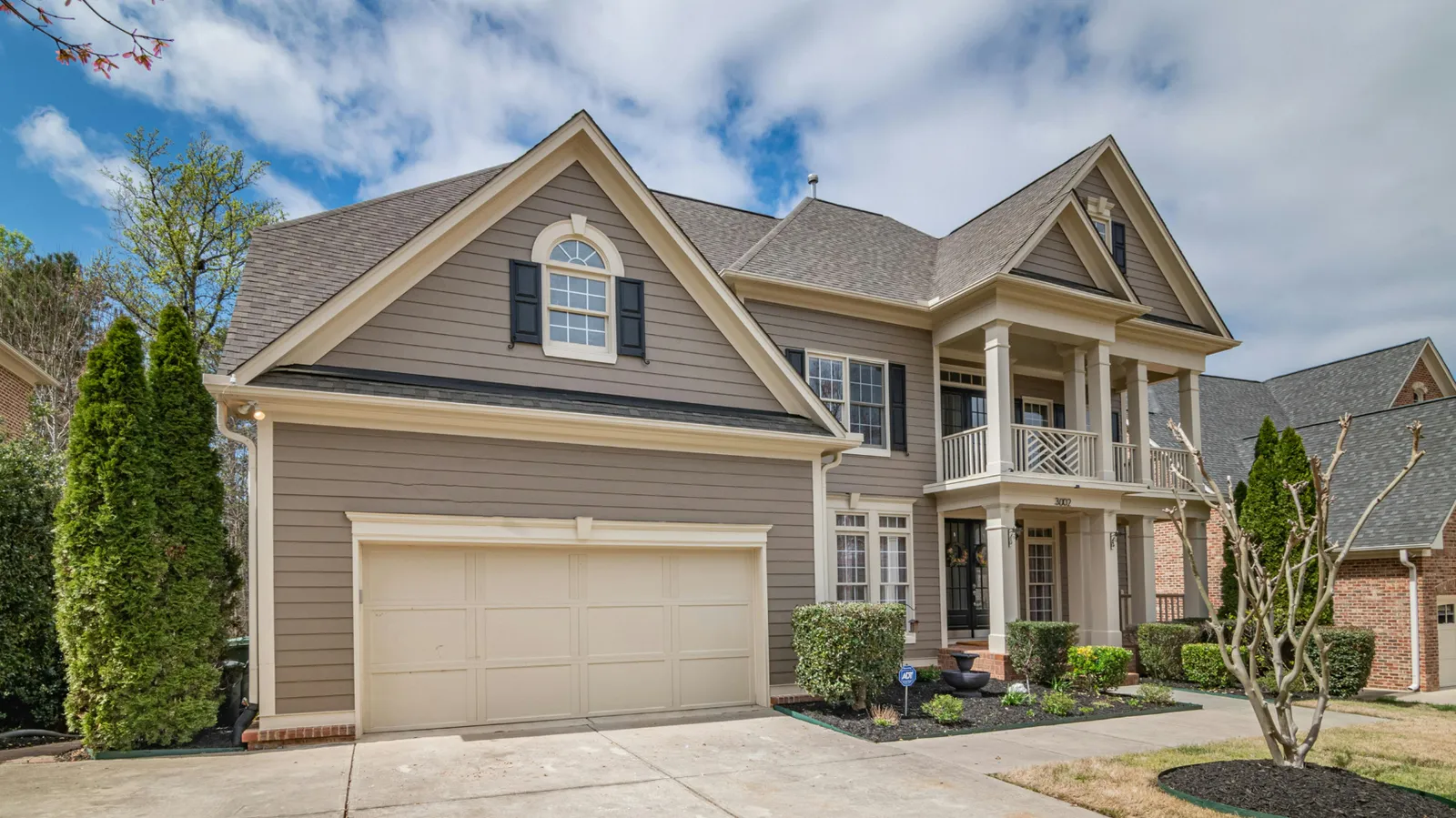
Roof replacement in Coweta, OK arrives in waves, and the reason is in the building record. Half the housing here was built after about 1997, and roughly a quarter of it went up in the 2000s.
One building wave, one service life
A neighborhood built inside a few years gets its roofs inside a few years. Asphalt has a working life measured in decades, so a street that went up together tends to reach the end of that life together. That is why a run of houses can look fine for years and then, over two or three seasons, start showing the same granule loss and the same tired ridge lines.
The older core runs on a different clock
Coweta incorporated in 1901 and grew around the railroad, so the core near Broadway is genuinely old while newer building spreads out from it. Two eras, two clocks. A roof near the original grid may have been replaced twice already; one out toward the newer edges may still be on its first covering.
Storms compress the timing
Wagoner County weather is not quiet. The NOAA record for the recent four-year window carries twelve hail days, a largest stone of an inch and a half, and a peak wind reading of 86 mph. Hail does not wait for a roof to be old. It shortens what is left, which is how a roof with a few years in it ends up in the same conversation as one that was already due.
What it means if you are on that street
Two things. First, condition decides, and age is only a hint: whether the granule layer is gone, whether the same plane keeps failing, and what the decking turns out to be when the old covering comes off. Second, timing is worth thinking about before the whole street calls at once. After a bad week the county calls together, and an early call gets a better slot than an urgent one.
Wondering where your own roof sits on that curve? Send Coweta Roofing Co what you are seeing and roughly when it started, and a local roofer takes a look before any number is discussed.
Contact us